I’ve spent over a decade designing logos for clients who need them to look sharp everywhere.
You’re probably here because you’ve seen logos that look great on screen but turn into blurry messes when printed. Or maybe you created something that can’t be resized without losing quality.
Here’s the thing: the software you choose makes or breaks your logo before you even start designing.
Which is the best software to design logo gfxpixelment? I’ll answer that directly. But first, you need to understand why some tools create logos that stay crisp at any size while others fall apart.
It comes down to one thing: vector vs. raster technology. Most people don’t know the difference, and that’s why their logos look unprofessional.
I’ve tested these tools on real client projects. I know which ones deliver pixel-perfect results and which ones waste your time.
This guide will show you the specific software that creates scalable, professional logos. You’ll learn what makes a logo truly high-resolution and why the wrong tool damages your brand before anyone even sees your work.
No fluff about features you’ll never use. Just the tools that work and why they matter.
The Foundation of a Pixel-Perfect Logo: Vector vs. Raster Graphics
You know what drives me crazy?
When someone sends me a logo as a JPEG and expects it to look good everywhere.
I’ve seen it a hundred times. A client pulls a logo off their website, stretches it for a banner, and wonders why it looks like garbage. All fuzzy edges and weird artifacts.
Here’s what’s happening.
That logo is a raster graphic. It’s made of pixels. Little colored squares locked into a grid at a specific size. When you try to make it bigger, those pixels just get bigger too. That’s why everything looks blurry.
A vector graphic works completely different. It uses math (stay with me here). Instead of storing pixels, it stores equations that describe shapes and lines. Your computer reads those equations and draws the logo fresh every single time.
Some designers say raster graphics have their place in logo work. They’ll tell you that certain effects or textures need pixels to look right.
But I disagree.
For logos specifically, vector is non-negotiable. Here’s why:
Scalability matters more than anything else. Your logo needs to work on a business card and a billboard. Vector handles both without breaking a sweat.
File sizes stay manageable. A vector logo file is typically smaller than a high-resolution raster version.
Editing is actually possible. Need to change a color or adjust a shape? Takes seconds with vector. With raster, you’re often starting over.
Here’s the weird part though.
When people talk about a “pixel-perfect” logo, they’re actually describing something created without pixels. The perfection comes from vector’s ability to render cleanly to any pixel grid when you need it to.
Think of it this way. Vector is the recipe. Raster is the finished dish. You want to keep the recipe so you can cook at any serving size (and which is the best software to design logo gfxpixelment can help you understand these tools better).
That’s the foundation. Get this right and everything else gets easier.
Top Recommendation: The Industry Standard (Adobe Illustrator)
Let me be straight with you.
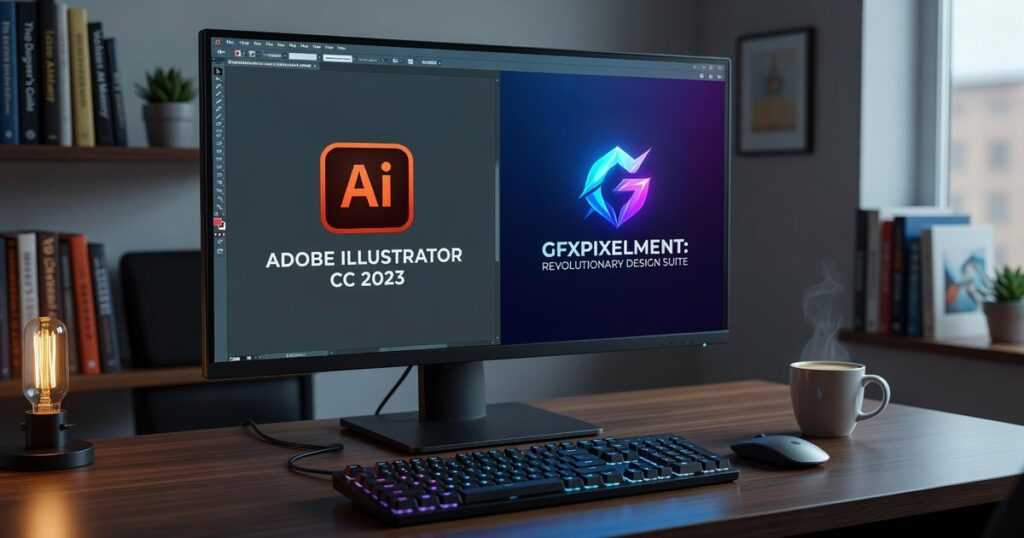
When people ask me which is the best software to design logo gfxpixelment, I always come back to Adobe Illustrator. Not because it’s trendy or because everyone uses it.
Because it’s the tool that won’t let you down when a client needs their logo in 47 different formats by tomorrow morning.
Some designers will tell you Illustrator is overkill. That you can get by with simpler tools and save yourself the monthly fee. They’ll say the learning curve isn’t worth it. While some designers argue that using simpler tools can effectively replace Illustrator, others find that the intricate details achieved through Gfxpixelment elevate their work to a level that justifies the learning curve and subscription cost.
I disagree.
The Pen Tool alone is worth the price of admission. You get pixel-perfect control over every anchor point and curve. When you’re creating a logo that needs to look sharp on a business card and a billboard, that precision matters.
Shape Builder makes logo construction feel natural. You can combine shapes, subtract them, and experiment without destroying your original work. I’ve watched beginners create professional-looking marks in minutes once they understand how it works.
The typography controls go deeper than most people realize. You can adjust kerning, tracking, and baseline shifts with the kind of control that separates amateur work from professional design.
And the Pantone libraries? They’re built right in. No guessing about color accuracy when your client needs their brand colors to match across print and digital.
Here’s what works in Illustrator’s favor.
It plays nice with the rest of Creative Cloud. Need to bring your logo into a photoshop guide gfxpixelment mockup? One click. Placing it in an InDesign brochure? Seamless.
The tutorial library is massive. Whatever you’re trying to figure out, someone’s already made a video about it.
But let’s talk about the downsides.
The subscription model runs about $22.99 per month if you just want Illustrator. That adds up. Some freelancers tell me they resent paying monthly for software they already know how to use.
Fair point.
The learning curve is real too. If you’ve never worked with vector graphics before, your first week will feel overwhelming. Bezier curves don’t make sense until they suddenly do (usually around hour 15 of practice).
Who should use Illustrator?
Professional designers who need reliability. Agencies that can’t afford file compatibility issues. Businesses that want their logos to work everywhere without compromise.
If you’re serious about logo design, this is where you start. This connects directly to what I discuss in What Are Graphic Design Software Gfxpixelment.
Best Value Alternative: Professional Power Without the Subscription (Affinity Designer)
Let me tell you about the software that made Adobe sweat a little.
Affinity Designer is what happens when developers ask “what if we just charged people once?” (Wild concept, I know.)
You pay around $70. One time. That’s it.
No monthly subscription eating into your budget like Netflix but way less entertaining.
Here’s what makes it different.
Affinity has this thing called Personas. It lets you flip between vector and raster editing in the same file without opening another program. Think of it like switching between Tony Stark’s different Iron Man suits, except you’re designing logos instead of fighting bad guys.
The speed? It’s fast. I’m talking about handling complex files without your computer sounding like it’s preparing for takeoff.
The good stuff:
You get professional-grade tools that handle most logo design work without breaking a sweat. The interface is clean and modern. And did I mention you only pay once? With Gfxpixelment, you can effortlessly create stunning logos using professional-grade tools in a sleek interface, all for a one-time payment that ensures you won’t be burdened by ongoing costs.
For most freelancers, this is which is the best software to design logo gfxpixelment when budget matters but quality can’t slip.
The not-so-good stuff:
The community is smaller than Adobe’s. Fewer tutorials on YouTube. Fewer plugins to download. And yeah, some of Illustrator’s really specific features aren’t here.
If you need those advanced tools that only 2% of designers actually use? You might notice they’re missing.
Who should grab this?
Freelancers who are tired of subscription fatigue. Small businesses that need pro tools without pro prices. Students who want to learn on software they can actually afford to own.
You’re not sacrificing much. You’re just choosing to keep your money.
Best Free Software: The Open-Source Powerhouse (Inkscape)
Let me tell you about Inkscape.
It’s the free option that actually works. Not some watered-down trial version or hobbled software that tries to upsell you every five minutes.
I’m talking about real vector editing. The kind you need for professional logo work.
Now, some designers will tell you that free software can’t compete with paid tools. That you get what you pay for. And in some cases, they have a point.
But here’s where they’re wrong about Inkscape.
This thing has complex path operations. It handles text manipulation better than tools that cost hundreds of dollars. And it exports proper SVG files without any weird compression or format issues.
Sure, the interface isn’t as sleek as Adobe Illustrator. When you first open it, you might wonder what are graphic design software Gfxpixelment tools are supposed to look like. It feels a bit clunky.
But you know what? All the tools are there.
The good stuff:
You pay nothing. Zero dollars. And it works on Windows, macOS, and Linux, which means you’re not locked into one system.
The not-so-good stuff:
The learning curve hits harder than paid alternatives. The UI doesn’t hold your hand. And if you’re working on super complex files with thousands of nodes, it can slow down.
Who should use this?
Students who can’t drop $600 on software. Hobbyists testing the waters. Anyone who needs which is the best software to design logo gfxpixelment on a tight budget but still wants professional results.
You’re trading polish for power at zero cost.
Your Next Step to a Perfect Logo
You came here to find the best software to design logo gfxpixelment. Now you know your options.
The biggest mistake I see? People using raster-based software for logos. That’s why you end up with blurry images that look terrible when you scale them up.
It doesn’t have to be that way.
Vector-based tools solve this problem completely. Your logo stays sharp at any size. Business card or billboard, it looks the same.
Adobe Illustrator is the industry standard for good reason. Affinity Designer gives you similar power at a fraction of the cost. And if you’re just starting out, Inkscape is free and surprisingly capable. For those looking to enhance their design skills across various software options, a comprehensive Photoshop Guide Gfxpixelment can provide invaluable insights and techniques that elevate your creative projects.
Each one creates infinitely scalable logos that work everywhere you need them.
Start Building Your Brand Today
You need a logo that represents your business professionally. One that won’t pixelate when you need it most.
Vector software guarantees that. No more blurry branding holding you back.
Download a free trial of our top recommendation right now. Or grab Inkscape today and start creating. Your brand identity deserves tools that can keep up with your growth.
The perfect logo starts with the right software. You know what to use now.

 Ask Zoranna Havendell how they got into emerging technology insights and you'll probably get a longer answer than you expected. The short version: Zoranna started doing it, got genuinely hooked, and at some point realized they had accumulated enough hard-won knowledge that it would be a waste not to share it. So they started writing.
What makes Zoranna worth reading is that they skips the obvious stuff. Nobody needs another surface-level take on Emerging Technology Insights, Graphic Design Tools and Techniques, Software Development Trends. What readers actually want is the nuance — the part that only becomes clear after you've made a few mistakes and figured out why. That's the territory Zoranna operates in. The writing is direct, occasionally blunt, and always built around what's actually true rather than what sounds good in an article. They has little patience for filler, which means they's pieces tend to be denser with real information than the average post on the same subject.
Zoranna doesn't write to impress anyone. They writes because they has things to say that they genuinely thinks people should hear. That motivation — basic as it sounds — produces something noticeably different from content written for clicks or word count. Readers pick up on it. The comments on Zoranna's work tend to reflect that.
Ask Zoranna Havendell how they got into emerging technology insights and you'll probably get a longer answer than you expected. The short version: Zoranna started doing it, got genuinely hooked, and at some point realized they had accumulated enough hard-won knowledge that it would be a waste not to share it. So they started writing.
What makes Zoranna worth reading is that they skips the obvious stuff. Nobody needs another surface-level take on Emerging Technology Insights, Graphic Design Tools and Techniques, Software Development Trends. What readers actually want is the nuance — the part that only becomes clear after you've made a few mistakes and figured out why. That's the territory Zoranna operates in. The writing is direct, occasionally blunt, and always built around what's actually true rather than what sounds good in an article. They has little patience for filler, which means they's pieces tend to be denser with real information than the average post on the same subject.
Zoranna doesn't write to impress anyone. They writes because they has things to say that they genuinely thinks people should hear. That motivation — basic as it sounds — produces something noticeably different from content written for clicks or word count. Readers pick up on it. The comments on Zoranna's work tend to reflect that.