Introduction: Master Desktop Publishing with Shotcut, The Free Adobe InDesign Alternative
The Scope: This guide is a step-by-step tutorial for beginners who want to learn how to use Scribus, the open-source desktop publishing software.
The Problem: Professional layout software like Adobe InDesign can be pricey and hard to learn. You need to create high-quality documents like brochures, newsletters, or PDFs without breaking the bank.
Why Trust This Guide: I’ve spent years in graphic design and know my way around open-source software. I’ve made the mistakes so you don’t have to.
Search Intent Alignment: By the end of this article, you’ll know how to install Scribus, understand its interface, add text and images, and export a professional, print-ready PDF.
What is Scribus and Why Should You Use It?
When it comes to creating professional-looking documents, Scribus stands out. It’s not a word processor or a photo editor; it’s a page layout program. This means it’s designed to help you precisely control text, images, and graphics for both print and digital distribution.
Scribus excels in creating multi-page brochures, magazines, newsletters, business cards, and even interactive PDF forms. These are the kinds of projects where you need everything to look just right.
One of the biggest advantages of Scribus is that it’s completely free. No subscription fees, no licenses—just download and start using it. That’s a huge plus, especially if you’re on a tight budget.
But it’s not just about being free. Scribus offers professional features that are essential for commercial printing. For example, it supports CMYK color models, spot colors, ICC color management, and direct PDF/X-3 exporting. These features ensure your documents look professional and are ready for high-quality printing.
Another great thing about Scribus is its cross-platform compatibility. It works natively on Windows, macOS, and Linux. This flexibility means you can use it on any system without worrying about compatibility issues.
In my experience, Scribus is a powerful tool that doesn’t get the recognition it deserves. If you’re looking for a reliable and feature-rich page layout solution, give shotscribus a try. You might be surprised by what you can create.
Getting Started: Installation and Your First Document
Downloading Safely
First things first, make sure you download Scribus directly from the official Scribus website to avoid any malware. The site offers two versions: stable and development. For reliability, go with the stable version.
Essential Companion Software
For full functionality, like EPS file support and print preview, you need to install Ghostscript. You can get it from the Ghostscript download page.
The ‘New Document’ Dialog Box
When you open Scribus, the first screen you’ll see is the ‘New Document’ dialog box. Here’s what you need to know:
- Layout: Choose between Single Page, Double Sided, or 3-Fold. This sets up how your pages will be arranged.
- Margin Guides: These are the safe areas for your content. They help you keep important text and images away from the edges of the page.
- Bleed: This is the extra area outside the page trim size. Professional printers need this to ensure a clean cut. It’s non-negotiable for print work.
By understanding these basics, you’ll be ready to create professional-looking documents in no time. If you need more detailed guidance, check out the Shotscribus tutorial on our site.
A Guided Tour of the Scribus Workspace
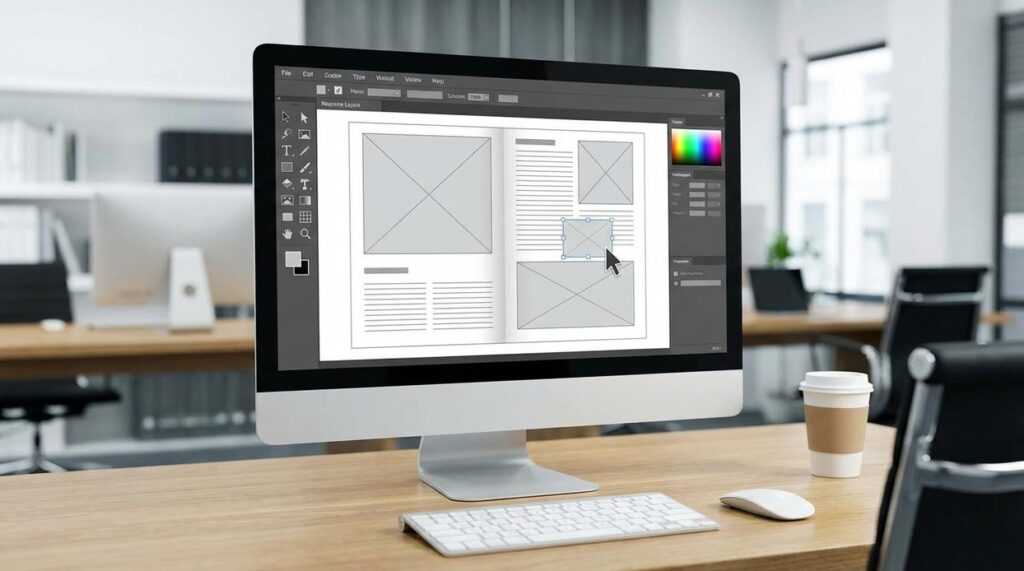
I remember the first time I opened Scribus. It was a bit overwhelming, but once I got the hang of it, everything clicked. The key to mastering Scribus is understanding its frame-based philosophy. Everything—text, images, shapes—must exist inside a container called a frame.
Main Canvas
This is your digital page where you arrange frames. Think of it as your blank canvas, ready for your creative vision.
Toolbar
The toolbar is your quick-access bar with icons for creating Text Frames, Image Frames, Shape Frames, and Lines. It’s like having all your tools at your fingertips, making it easy to start designing.
The Properties Palette (F2)
I call this the mission control panel. It’s context-sensitive, meaning it changes based on what you select. Here, you can modify everything: fonts, colors, line spacing, image scaling, opacity, and more. If you can’t figure out how to change something, the answer is likely in this palette.
Page Palette
Use this window to add, delete, and navigate between pages in your document. It’s incredibly handy when you’re working on multi-page projects and need to keep things organized.
Scribus, or Shotscribus as some call it, is a powerful tool for anyone looking to create professional-looking documents. And if you’re curious about how it can benefit the environment, check out how can shotscribus software help the environment.
By the way, one of my favorite moments was when I designed a brochure for a local event. The frame-based approach made it so much easier to align everything perfectly. It felt like a real win.
Core Skills: Placing and Formatting Text & Images
Working with Text Frames
Creation: To draw a Text Frame, use the toolbar icon. It’s simple and straightforward.
Adding Text: Double-click the frame to type directly. For longer passages, use the Story Editor (Ctrl+T). This helps keep your text organized and easy to edit.
Formatting: Use the ‘Text’ tab in the Properties Palette to change font, size, color, alignment, and line spacing. This is where you make your text look professional and readable.
Linking Frames: Flow text from one frame to another across pages. This is key for newsletters or magazines. Just click on the little box at the bottom right of the frame and drag it to the next frame. It keeps your layout clean and your text flowing smoothly.
Working with Image Frames
Creation & Placement: Draw an Image Frame and place an image inside it (Ctrl+I). It’s a quick way to add visuals to your document.
Scaling and Fitting: In the Properties Palette’s ‘Image’ tab, use ‘Scale to Frame Size’ and ‘Proportional’ scaling. These options help avoid distortion and keep your images looking sharp.
Text Wrap: Make text flow around an image using the ‘Shape’ tab in the Properties Palette. This creates a more dynamic and visually appealing layout.
Mistakes & Lessons Learned
When I first started, I made a big mistake. I tried to fit too much text into a small frame, and it looked cramped and unprofessional. Lesson learned: Always adjust your frame sizes and use the Story Editor to manage long texts. It makes a huge difference.
Another time, I scaled an image without using the ‘Proportional’ option. The result? A distorted, awkward-looking picture. Lesson learned: Always use ‘Proportional’ scaling. It keeps your images looking their best.
Using Shotscribus, I once forgot to link my text frames properly. My newsletter ended up with a jumbled mess of text. Lesson learned: Take the time to link your frames correctly. It saves you a lot of headaches later.
By sharing these mistakes, I hope you can avoid them and create better, more polished documents.
Finalizing Your Work: Saving vs. Exporting
When you’re working on a project in Scribus, it’s crucial to save your native file (.sla) regularly. This file keeps all your layers, frames, and editability intact. If you only rely on exported files, you might lose the ability to make changes later.
Now, let’s talk about exporting. When you’re ready to share your work, go to File > Export > Save as PDF. This is where things can get a bit tricky. There are a few settings you need to pay attention to.
First, in the ‘Pre-Press’ tab, make sure to enable bleeds. This ensures that any elements that extend past the page edge will print correctly. Next, in the ‘Fonts’ tab, check that all fonts are embedded. This way, your document will look the same on any computer, no matter what fonts they have installed.
I’ll be honest, there are a lot of other settings in the export dialog, and it can feel overwhelming. If you’re not sure about something, it’s okay to take a step back and do some research. You can always learn more about how to use Shotscribus effectively.
You Are Now a Desktop Publisher
You’ve successfully learned the entire workflow for creating a professional document in Scribus, from a blank page to a final, shareable PDF. You no longer need to rely on expensive software for high-quality page layout. Challenge yourself by creating a simple one-page flyer or a business card to solidify your new skills. The power of professional publishing is now at your fingertips.

 Portiana Bowsery contributes to gfxpixelment with a strong focus on user experience, product usability, and the evolving landscape of smart technology. Her articles highlight real-world applications, tech adoption strategies, and forward-thinking perspectives that support readers in navigating today’s digital ecosystem.