I’ve been using Photoshop for graphic design work for years, and I can tell you this: most people waste time on tools they’ll never need.
You’re probably here because you want to actually create something in Photoshop without getting lost in a maze of features. Smart move.
Here’s the reality: Photoshop has hundreds of tools. You need maybe 20 of them for solid graphic design work.
I put together this Photoshop guide GFXPixelMent to show you exactly which tools matter and how to use them in a real workflow. Not theory. Not every possible feature. Just what works.
This comes from actual project experience. I’ve completed countless design projects and learned what steps you can skip and which ones you absolutely can’t.
You’ll get a clear workflow you can follow from your first blank canvas to your final export. Each step builds on the last one.
No detours into obscure filters or effects you’ll use once and forget. Just the core process that gets you professional results.
Let’s start with setup and work our way through to a finished design you can actually use.
Step 1: Setting Up Your Project for Success
Most people skip this part.
They open Photoshop, click New Document, type in some numbers and hit Create. Then they wonder why their Instagram post looks perfect on screen but prints like garbage.
Here’s what nobody tells you about project setup.
The choices you make in that first window? They determine everything that comes after. You can’t just switch from web to print halfway through without starting over (trust me, I’ve tried).
The Settings That Actually Matter
Let me break down what you need to know.
Resolution is not complicated. You need 72 PPI for anything that lives on a screen. Websites, social media, digital ads. That’s it. For print work, you need 300 PPI. Period.
Why? Your screen can’t display more than 72 pixels per inch anyway. Going higher just creates massive files that take forever to save. But printers need those extra pixels to look sharp on paper.
Some designers say resolution doesn’t matter anymore with modern displays. They’ll tell you to just work at whatever feels right. But when your client’s billboard comes out blurry because you used 72 PPI, that advice won’t help you.
Color mode works the same way. RGB for screens. CMYK for print. Screens use light to make colors. Printers use ink. They’re not the same thing.
That bright blue that looks amazing in RGB? It might turn muddy when you convert to CMYK for printing. Better to know that NOW than after you’ve finished the design.
Artboards changed how I work. Instead of juggling ten different files for one social media campaign, I keep everything in one document. Different sizes for Facebook, Instagram, Twitter. All right there.
You can see how your designs work together. Copy elements between them. Make changes once instead of ten times.
If you’re still wondering what is a good design software gfxpixelment, this is exactly why Photoshop makes the cut.
What happens after you nail these settings? You’ll need to understand layers. Because that’s where the real work begins.
Step 2: Mastering the Core Graphic Design Toolkit
You can fumble around with Photoshop for years and still miss the basics.
I see it all the time. Designers who know fifty shortcuts but can’t kern text properly. Or they create beautiful work that falls apart the second someone needs to edit the file.
Here’s what I think will happen over the next few years. The designers who master these core tools now will have a massive advantage when AI design tools become mainstream. Because you’ll know what actually makes good design work, not just how to generate it.
Let me show you what matters.
The Pen Tool & Shape Tools
Some people say the Pen Tool is outdated. That you should just use Illustrator for vector work.
But that misses the point entirely.
When you’re working on a composite design or need quick vector elements without switching programs, the Pen Tool saves you. I use it for creating custom shapes and paths that integrate directly with my photo work. The seamless integration of the Pen Tool into my workflow not only enhances my composite designs but also allows me to create unique vector elements effortlessly, making it an essential asset for achieving that perfect Gfxpixelment in my projects.
The key is understanding that Photoshop’s vector tools create shape layers. They’re scalable and clean, perfect for logos and icons when you need them fast.
Start with the basic shapes. Rectangles, ellipses, polygons. Then move to the Pen Tool once you understand how paths work.
The Type Tool: Beyond Basic Text
This is where most beginners fall apart.
They type some words, pick a font, and call it done. Then they wonder why their designs look amateur compared to what they see on Gfxpixelment.
Here’s what you need to know.
Character vs. Paragraph text. Character text is for headlines and short phrases. Click and type. Paragraph text is for body copy where you need defined boundaries.
Kerning adjusts space between two specific letters. Tracking adjusts spacing across entire words or sentences. Leading controls the space between lines.
I’ll make a prediction here. Within two years, AI will handle basic kerning automatically. But you’ll still need to know these principles to fix what the AI gets wrong (and it will get things wrong).
| Typography Term | What It Controls | When to Adjust |
|---|---|---|
| —————- | —————— | —————- |
| Kerning | Space between two letters | Headlines with awkward letter pairs |
| Tracking | Overall letter spacing | Body text readability |
| Leading | Space between lines | Paragraph density and flow |
Layer Styles (FX)
This is where your designs get polish.
Drop shadows. Strokes. Gradients. Inner glows. All non-destructive, meaning you can tweak them anytime without starting over.
The photoshop guide gfxpixelment approach I use? Start subtle. Most beginners go overboard with effects and end up with designs that look like 2005 MySpace pages.
Click the FX icon at the bottom of your Layers panel. Experiment with blending modes. Watch how different styles interact with each other.
Pro tip: Save your favorite style combinations as presets. You’ll use them again.
Layer Organization
Nobody talks about this enough.
A messy PSD file will destroy your productivity. You’ll spend twenty minutes hunting for the right layer when you could be designing.
Name every layer. Not “Layer 47” but “Header Text” or “Background Gradient.”
Group related layers into folders. Use color coding if you’re working on complex projects.
Here’s my speculation. As design files get more complex and collaborative, the designers who can’t organize their work will get left behind. Clients and team members won’t wait while you dig through chaos.
Think of it like this. Your layer panel should tell the story of your design at a glance.
I’ve opened files from other designers that had 200+ unnamed layers. It’s not just unprofessional. It’s a sign they don’t respect their own time or anyone else’s.
Start building good habits now. Your future self will thank you.
Step 3: The Non-Destructive Workflow That Pros Use
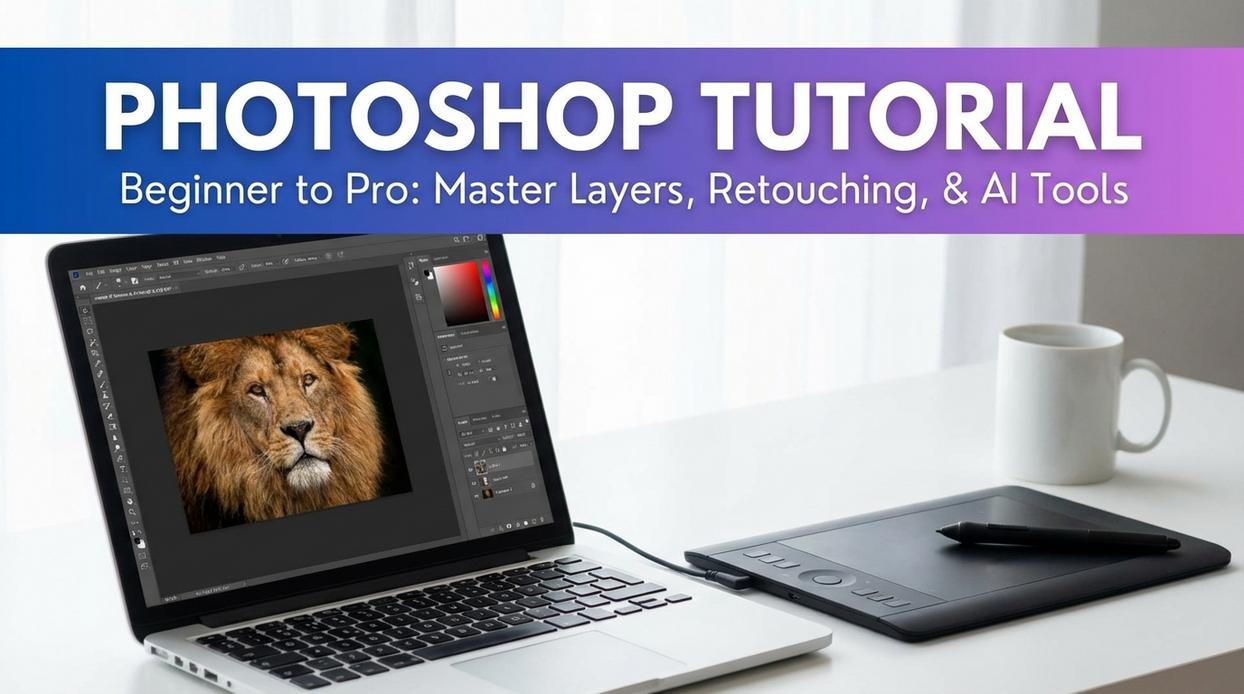
Here’s something most Photoshop tutorials won’t tell you. For additional context, Software News Gfxpixelment covers the related groundwork.
All those quick edits you’re making directly on your image layer? You’re painting yourself into a corner.
I see this constantly. People spend hours perfecting an edit, then the client asks for one small change. Suddenly they’re starting over because they flattened everything or worked destructively. In the realm of graphic design, where efficiency is key and clients often request last-minute tweaks, many designers find themselves pondering the question, “Which Is the Best Software to Design Logo Gfxpixelment,” to avoid the pitfalls of destructive editing.
Now, some designers will say non-destructive editing is overkill. They’ll tell you it slows down your workflow and creates bloated file sizes. Just make good decisions the first time, they say.
But that’s not how real projects work.
Clients change their minds. Art directors want to see variations. You discover a better approach halfway through. Working destructively means you’re stuck with every decision you make.
Non-destructive editing means making changes without permanently altering your original pixels. You keep all your options open.
Let me show you the three techniques I use in every single project.
Smart Objects are your first line of defense. Right-click any layer and convert it to a Smart Object. Now you can resize, rotate, and apply filters without losing quality. Scale something down then change your mind? No problem. The original data is still there.
This matters more than you think. I’ve watched designers recreate entire compositions because they scaled something down and couldn’t scale it back up without it looking terrible. We break this down even more in Gfxpixelment Tech Updates Bygfxmaker.
Adjustment Layers sit above your image and modify what you see without touching the actual pixels. Want to shift colors? Add a Hue/Saturation adjustment layer. Need to fix exposure? Use Curves. The original image stays untouched underneath.
You can stack these, turn them on and off, and tweak them anytime. I keep adjustment layers in every photoshop guide gfxpixelment I create because they give me total control.
Layer Masks let you hide or reveal parts of any layer without erasing anything. Paint with black to hide, white to reveal, gray for partial transparency. It’s like having an undo button that works forever.
The pros I know? They never erase. They mask.
This workflow feels slower at first. But once you need to make changes (and you will), you’ll save hours.
Step 4: Finalizing and Exporting Your Designs
You’re almost done.
But here’s where most people mess up. They spend hours perfecting their design and then export it wrong. The colors look off. The file is too big. Or it won’t print correctly.
I’ve been there. You send a file to a client and they come back saying it doesn’t work. That’s why I always run through a final check before I export anything.
Your Pre-Export Checklist
Look for typos first. I know it sounds basic but you’d be surprised how often text errors slip through when you’re focused on visuals.
Check your alignment. Zoom out to 50% and see if anything looks crooked or off-center.
Delete the layers you don’t need. That hidden background you turned off three hours ago? Get rid of it. Cleaner files are easier to work with later.
Exporting for Web
Go to File and choose Export As. (Some versions still have Save for Web Legacy but Export As gives you better control.)
Here’s what you need to know about formats.
Use JPEG for photos and designs with lots of colors. The file size stays small and it works everywhere. Just don’t save it at 100% quality because the difference between 80% and 100% is barely visible but the file size doubles.
PNG is what I use for logos and graphics with transparency. It keeps sharp edges clean and you can place it over any background. PNG-8 works for simple graphics. PNG-24 handles complex images with transparency.
GIF? Only use it for simple animations or graphics with very few colors. It’s outdated for most web work.
(If you’re still figuring out which is the best software to design logo gfxpixelment, these export settings apply across most programs.)
Keep your file sizes under 200KB for web graphics when possible. Compress JPEGs to 60-80% quality. Most people won’t notice the difference but your site will load faster.
Packaging for Print
Print is different. You need a PDF.
Go to File then Save As and choose Photoshop PDF. In the dialog box, select photoshop guide gfxpixelment Press/Quality preset.
Make sure you check the box that says Embed Fonts. If you don’t, the printer might substitute a different font and your design will look wrong.
Flatten your layers before saving if the printer asks for it. Some print shops prefer this. Just save a copy with layers first so you can make edits later. When preparing your artwork for print, it’s essential to remember to flatten your layers if requested, prompting the question, “What Is a Good Design Software Gfxpixelment” that can streamline this process while still allowing for editable versions of your work.
Set your resolution to 300 DPI minimum. Anything less looks blurry in print.
That’s it. Your file is ready to go.
Your New Photoshop Workflow
You now have a complete workflow for tackling any graphic design project in Photoshop.
From the first pixel to the final file, you know what to do.
I get it. Photoshop can feel overwhelming when you’re staring at all those tools and panels. But it doesn’t have to be that way anymore.
The difference comes down to structure. Proper setup, core tools, a non-destructive workflow, and correct export settings. That’s what separates clean, professional work from the messy stuff.
You don’t need to memorize every feature. You just need a system that works.
Here’s what I want you to do: Open Photoshop right now and start a new project using this photoshop guide gfxpixelment. Follow the steps we covered. You’ll see how much faster and cleaner your work becomes when you have a real workflow.
Need more help? We’ve got graphic design resources and tutorials waiting for you. Each one is built the same way, no fluff, just what works.
Your designs will thank you for it.

 Ask Zoranna Havendell how they got into emerging technology insights and you'll probably get a longer answer than you expected. The short version: Zoranna started doing it, got genuinely hooked, and at some point realized they had accumulated enough hard-won knowledge that it would be a waste not to share it. So they started writing.
What makes Zoranna worth reading is that they skips the obvious stuff. Nobody needs another surface-level take on Emerging Technology Insights, Graphic Design Tools and Techniques, Software Development Trends. What readers actually want is the nuance — the part that only becomes clear after you've made a few mistakes and figured out why. That's the territory Zoranna operates in. The writing is direct, occasionally blunt, and always built around what's actually true rather than what sounds good in an article. They has little patience for filler, which means they's pieces tend to be denser with real information than the average post on the same subject.
Zoranna doesn't write to impress anyone. They writes because they has things to say that they genuinely thinks people should hear. That motivation — basic as it sounds — produces something noticeably different from content written for clicks or word count. Readers pick up on it. The comments on Zoranna's work tend to reflect that.
Ask Zoranna Havendell how they got into emerging technology insights and you'll probably get a longer answer than you expected. The short version: Zoranna started doing it, got genuinely hooked, and at some point realized they had accumulated enough hard-won knowledge that it would be a waste not to share it. So they started writing.
What makes Zoranna worth reading is that they skips the obvious stuff. Nobody needs another surface-level take on Emerging Technology Insights, Graphic Design Tools and Techniques, Software Development Trends. What readers actually want is the nuance — the part that only becomes clear after you've made a few mistakes and figured out why. That's the territory Zoranna operates in. The writing is direct, occasionally blunt, and always built around what's actually true rather than what sounds good in an article. They has little patience for filler, which means they's pieces tend to be denser with real information than the average post on the same subject.
Zoranna doesn't write to impress anyone. They writes because they has things to say that they genuinely thinks people should hear. That motivation — basic as it sounds — produces something noticeably different from content written for clicks or word count. Readers pick up on it. The comments on Zoranna's work tend to reflect that.