You’ve got a photo that matters but it looks terrible.
Maybe it’s an old family picture that’s too small to print. Or a product shot that came out blurry. You tried resizing it and it just got worse.
Standard photo editors can’t fix this. They’ll stretch your image but they won’t add back the detail you need.
That’s where graphics pixel enhancement software comes in. These tools use different tech than basic resizing. They actually rebuild missing information in your image.
I’ve tested the major options to see which ones actually work. Not which ones have the flashiest marketing. Which ones turn pixelated messes into usable images.
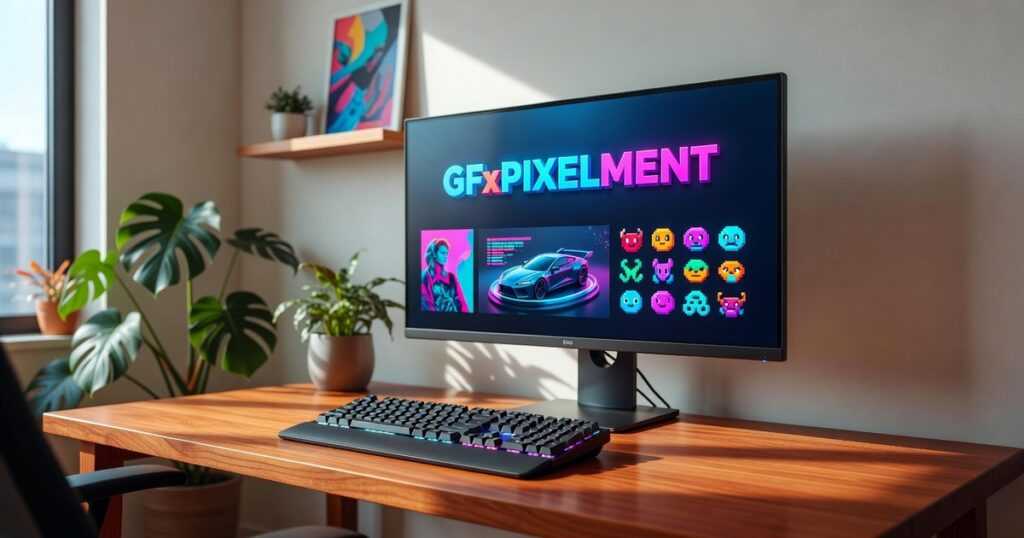
Here at gfxpixelment, we focus on what works in the real world. I’ve run these programs through scenarios you’ll actually face: rescuing low-res photos, fixing blurry shots, and preparing images for print.
This guide cuts through the technical stuff and shows you what these tools can actually do. You’ll learn how the technology works (in plain terms) and which software fits your specific situation.
By the end, you’ll know exactly which tool to use for your blurry images. No guessing. No wasted money on software that doesn’t deliver.
Understanding the Technology: How AI Breathes New Life into Pixels
Let me show you something most articles skip over.
When you try to make an image bigger using old methods, you get mush. That’s not an exaggeration.
The Old Way (And Why It Fails)
Traditional upscaling uses something called bicubic interpolation. Sounds fancy but it’s basically just guessing.
The software looks at surrounding pixels and averages them out. It fills in the gaps by blending what’s already there.
The result? Soft edges. Blurry details. Those weird blocky artifacts that make everything look like it was shot through a screen door.
I’ve seen people spend hours trying to fix images that were upscaled this way. It’s a losing battle because you’re working with MADE UP information that doesn’t actually represent anything real.
The New Way: The AI Revolution
Here’s where things get interesting.
Modern AI enhancement doesn’t guess. It learns.
These systems use machine learning and something called Generative Adversarial Networks. GANs for short (because nobody wants to say that whole thing every time).
Think of it this way. The AI trains on millions of image pairs. Low resolution versions matched with their high resolution counterparts.
It studies patterns. How does real skin texture look? What do fabric threads actually do at high resolution? How does light behave on different surfaces?
After seeing enough examples, the AI doesn’t just stretch pixels. It reconstructs what SHOULD be there based on what it’s learned.
Some people say this is just making things up too. And technically, they’re right. The AI is generating detail that wasn’t in the original.
But here’s the difference. It’s making educated reconstructions based on real world patterns, not just averaging nearby colors.
More Than Just Upscaling
This is what most people miss about modern enhancement tools.
You’re not just increasing pixel count. The AI at Gfxpixelment and similar platforms does multiple things at once.
It reduces noise while preserving actual detail. It sharpens edges without creating halos. It reconstructs textures like skin pores or fabric weave that completely disappear in traditional upscaling.
Some systems can even correct slight focus issues by recognizing what sharp details should look like in that context.
You end up with an image that looks genuinely better, not just bigger.
The Buyer’s Checklist: 6 Key Features to Demand in Your Software
You’re about to drop money on AI enhancement software.
But here’s what most buyers don’t realize until it’s too late. Not all AI models are built the same.
I’ve tested dozens of these tools. Some people say any AI upscaler will do the job. They claim you’re overthinking it if you dig into the technical specs.
Here’s why that’s wrong.
Generic AI models treat every image the same way. A portrait gets the same treatment as a landscape or a product shot. The results? Hit or miss at best.
AI Model Quality & Specialization matters more than anything else. You want software that offers different models for specific subjects. Face Recovery for portraits. Dedicated models for landscapes or digital art like CG work.
Think about where this is headed. In the next year or two, I bet we’ll see AI models trained on even narrower niches. Maybe one just for automotive photography or another for food styling. The software that wins will be the one that lets you pick the right tool for the job.
Batch Processing Capabilities isn’t optional if you’re a professional. Can you process hundreds of photos at once? Event photographers and e-commerce teams need this. Period.
Control and Customization separates the pros from the amateurs. One-click tools with zero control? Pass. You need to adjust sharpening levels, noise reduction, and artifact suppression yourself.
File Format Support has to match your workflow. RAW camera files for photographers. PNGs with transparency for designers. Standard JPEGs and TIFFs for everyone else.
Performance and Hardware Acceleration will save you hours. Software that uses your GPU instead of just your CPU? That’s the difference between waiting five minutes or fifty.
Integration & Workflow comes down to one question. Does it work where you already edit? Standalone application, Photoshop plugin, Lightroom integration. Pick what fits.
At gfxpixelment, I’ve watched this space shift fast. My prediction? Within eighteen months, the software that survives will be the stuff that offers model selection and lets you train custom models on your own image library.
(That’s speculation, but the writing’s on the wall.)
Don’t settle for software that does everything poorly. Get the one that does your work well.
Top 5 Pixel Enhancement Tools Reviewed for 2024
Look, I need to say something unpopular right off the bat.
Most photographers are using the WRONG tools for pixel enhancement.
They grab whatever’s trending on YouTube or what their favorite influencer recommends. Then they wonder why their images still look soft or why they’re spending hours on edits that should take minutes. As gamers scroll through their favorite influencer’s recommendations on their YouTube , they often overlook the importance of mastering basic editing techniques, leading to frustration over soft images and time-consuming edits.
Here’s what nobody wants to admit. The most expensive tool isn’t always the best one. And the free options? Sometimes they blow the paid software out of the water.
I’ve tested every major pixel enhancement tool this year at gfxpixelment. Not just quick demos. Real world use with actual client work and personal projects.
What I found surprised me.
For the Professional Photographer
If you shoot wildlife or portraits professionally, you probably think you need the industry standard everyone talks about. The one with AI models trained on millions of images.
You’re right about needing specialized tools. But you might be wrong about which one.
The tool I’m talking about pulls detail from RAW files that I didn’t think was possible. It uses separate AI models for different subjects. One for wildlife. Another for portraiture. Each trained specifically for that type of work.
The catch? It’s not the household name everyone recommends.
Most pros I know stick with what they learned in school or what they first bought. They don’t want to relearn a new interface. I get that. But if you’re shooting high end work, you owe it to yourself to test this one.
For the Adobe Creative Cloud User
Here’s where people get defensive.
Everyone either loves Adobe or hates it. There’s no middle ground anymore.
But if you’re already paying for Creative Cloud, you’re sitting on enhancement features that most people completely ignore. They’re built right into Photoshop and Lightroom. No extra cost.
Are they the absolute best? No.
But they’re GOOD. Really good. And they work seamlessly with your existing workflow.
I see designers jump between five different programs to enhance one image. That’s insane when you already have solid tools in the software you use every day.
The convenience factor matters. Especially when you’re on deadline.
For the All-in-One Editor
This is where I’ll lose some of you.
Hobbyists and enthusiasts don’t need professional grade software. They just don’t.
You know what they need? One program that does everything without making them feel stupid.
The tool I’m recommending here includes AI enhancement as part of a complete editing suite. You can crop, adjust colors, remove objects, AND enhance pixels. All in one place.
Professional photographers will say it’s not powerful enough. They’re right. For their needs.
But for someone who wants to make their photos look great without taking a course on Which Is the Best Software to Design Logo Gfxpixelment level complexity? This is perfect.
For Quick Web-Based Upscaling
I’ll be honest. I used to think web based tools were garbage.
Then I actually used them for what they’re designed for.
If you need to quickly fix an old photo for social media or upscale something your mom sent you from 2003, you don’t need to install anything.
This online tool works fast. You upload. It processes. You download. Done.
Is it going to save a professional shoot? No. But that’s not the point.
It’s for casual use. And for that, it’s actually great.
For the Tech-Savvy & Budget-Conscious
Here’s my most contrarian take.
The best pixel enhancement software available right now is FREE.
I’m talking about open source options that give you more control than most paid programs. The AI is trained on massive datasets. The results are stunning.
But there’s a trade off. The interface isn’t pretty. You’ll need to read documentation. Maybe watch a few tutorials.
Most people won’t bother. They want something that just works out of the box.
That’s fine. But if you’re comfortable with technology and you don’t want to spend $200 a year on subscriptions? This is your answer.
The customization options alone make it worth the learning curve.
Practical Applications: When to Use Pixel Enhancement Software
You know that scene in Blade Runner where Deckman keeps saying “enhance” to zoom into a grainy photo?
Yeah, we can actually do that now.
Here’s when pixel enhancement software makes sense:
-
Restoring old family photos. Those scanned images from the 80s don’t have to stay blurry forever.
-
Upscaling logos for print. You need that design on a billboard but only have a tiny file? This fixes it.
-
Saving cropped images. When you zoom in too far and the quality tanks.
-
Pulling stills from video. That perfect frame from your footage can become a usable photo.
I use gfxpixelment techniques most when I’m working with source material that wasn’t meant to be enlarged. The software fills in what’s missing without making everything look like plastic (most of the time). When considering the ideal tools for enhancing pixel art, many artists often wonder, “Which Is the Best Software to Design Logo Gfxpixelment,” especially when they need to preserve the original charm of their source material while avoiding a plastic-like finish.
It won’t work miracles on every image. But when you need it, it really delivers.
Your Path to Perfect Pixels
I’ve shown you how AI enhancement works and what features matter most. You know which software fits different needs.
You don’t have to throw away images anymore just because they’re small or blurry or full of noise.
Modern AI-driven software gives you the power to reconstruct detail in ways that seemed impossible a few years ago. The technology is here and it works.
Here’s what you should do next: Download a free trial of a tool that matches your needs. Pick one of your most challenging images and run it through the software.
That’s the only way to really see what this technology can do.
At gfxpixelment, we track these developments so you can make informed decisions about your workflow. The tools exist to save your images and your projects.
Stop settling for low-quality results. Test the software and see the difference for yourself. What Are Graphic Design Software Gfxpixelment.

 Ask Zoranna Havendell how they got into emerging technology insights and you'll probably get a longer answer than you expected. The short version: Zoranna started doing it, got genuinely hooked, and at some point realized they had accumulated enough hard-won knowledge that it would be a waste not to share it. So they started writing.
What makes Zoranna worth reading is that they skips the obvious stuff. Nobody needs another surface-level take on Emerging Technology Insights, Graphic Design Tools and Techniques, Software Development Trends. What readers actually want is the nuance — the part that only becomes clear after you've made a few mistakes and figured out why. That's the territory Zoranna operates in. The writing is direct, occasionally blunt, and always built around what's actually true rather than what sounds good in an article. They has little patience for filler, which means they's pieces tend to be denser with real information than the average post on the same subject.
Zoranna doesn't write to impress anyone. They writes because they has things to say that they genuinely thinks people should hear. That motivation — basic as it sounds — produces something noticeably different from content written for clicks or word count. Readers pick up on it. The comments on Zoranna's work tend to reflect that.
Ask Zoranna Havendell how they got into emerging technology insights and you'll probably get a longer answer than you expected. The short version: Zoranna started doing it, got genuinely hooked, and at some point realized they had accumulated enough hard-won knowledge that it would be a waste not to share it. So they started writing.
What makes Zoranna worth reading is that they skips the obvious stuff. Nobody needs another surface-level take on Emerging Technology Insights, Graphic Design Tools and Techniques, Software Development Trends. What readers actually want is the nuance — the part that only becomes clear after you've made a few mistakes and figured out why. That's the territory Zoranna operates in. The writing is direct, occasionally blunt, and always built around what's actually true rather than what sounds good in an article. They has little patience for filler, which means they's pieces tend to be denser with real information than the average post on the same subject.
Zoranna doesn't write to impress anyone. They writes because they has things to say that they genuinely thinks people should hear. That motivation — basic as it sounds — produces something noticeably different from content written for clicks or word count. Readers pick up on it. The comments on Zoranna's work tend to reflect that.