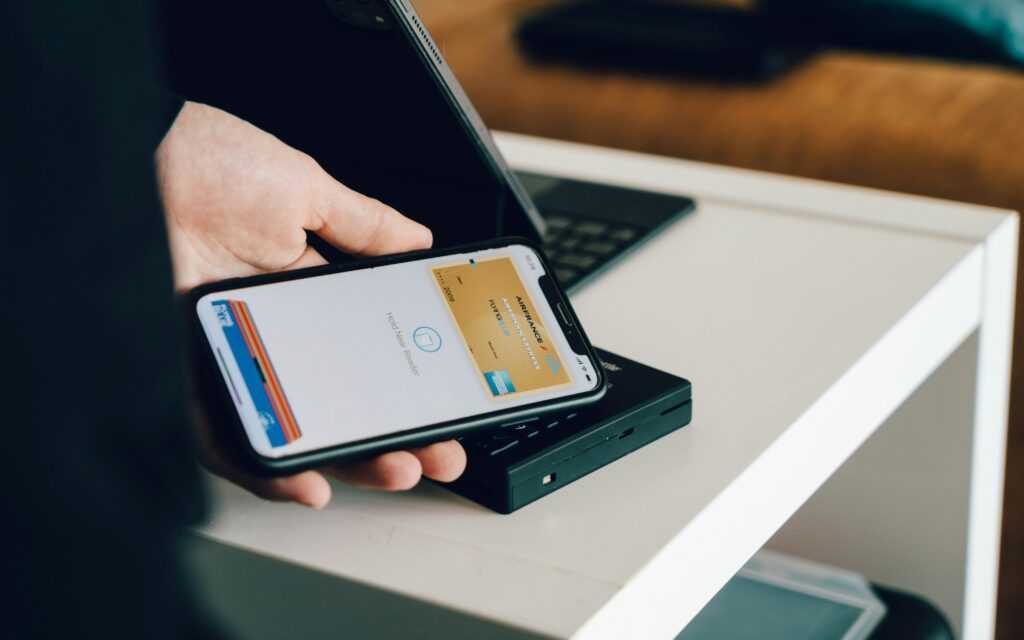
While reaching the midpoint of the year 2026, the context of “Emerging Technology Insights” has changed to an era of complete financial fluidity. No longer is just tapping a phone the standard. We are entering a time where there is less and less ‘friction’ in thought to digitally completing a transaction. A perfect example is in the rapidly evolving economies of Southeast Asia. These markets have built niche financial products in response to financial ‘friction’. A recent example is สล็อตเว็บตรง ฝากถอน true wallet ไม่มี ขั้น ต่ํา. Southeast Asian consumers prioritized instantaneous access to funds over other financial product functionality. This highlighted demand for no deposit and no-requirements access. We are witnessing a global trend that signifies the future of technology is focused on eliminating barriers to interaction for users.
The Evolution of Unified Digital Wallets in 2026
Unified banking apps are finally dead to the banking industry. Unified digital wallets are replacing banking apps that let customers spend, save, and invest in cryptocurrencies and cash separately. Unified digital wallets come with a fully managed artificial intelligence system. This means that if you need to spend money on an expense that occurs in your day-to-day life, unified digital wallets will predict the future and ensure you always have money saved, spent, and invested across all your asset classes.
What do unified digital wallets do in 2026?
- You will be able to spend different types of digital currencies (stablecoins, cash, and cbdc’s) and digital currencies at the same time to any vendor who accepts money.
- If you buy a dairy milk chocolate bar priced at one dollar and your digital wallet also contains a one dollar bill, that will act as your near dollar and will buy a four dollar bar of gold as a digital gold bar that will be fractional and will combine with the dollars of the other transaction to also buy an ounce as a digital gold bar.
- When you pay for things, you digitally pay without the others at digital cash.
- You unified digital wallet means you have to pay for your digital cash, your digital cash,@your digital savings@and your digital cash, your unified digital wallet means you have to digitally pay for your digital investments @unit.
Why is Decentralized Finance Changing Personal Transactions?
Not too long ago, we gave a very vague definition of Decentralized Finance (DeFi) to help guide our audience during the early stages of the internet. Now we see it having far reaching effects in the Emerging Technology Insights in the post Pandemic. In 2026 and beyond, the ‘middleman’ in a transaction is a smart contract and not a bank teller. This type of innovation allows businesses to operate without a costly overhead of traditional transaction costs.
The 3 main selling points are:
- Decreased Time to Completion. With DeFi, customers can transact in under 1.2 seconds (as opposed to traditional business models where the expected settlement time may be 3 business days).
- Accessibility from Anywhere in the World. High-yield savings protocols are usually locked in for institutional investors. Now with just a smartphone (average 3rd world country citizen), anyone can access these savings protocols.
- Money is Programmable. People can now set ‘rules’ for their payments. For Example, ‘Do not allow this payment to go through if the shipping tracker shows the item has not reached my city.’
Implementing Biometric Security Measures in Current Technologies
Passwords are a thing of the past. Simple fingerprint scans have become yesterday’s news. As of 2026, Biometrics have evolved, and new types of biometric analyses have seen considerable widespread use. Cameras that analyze and recognize a person’s way of walking, and cameras that recognize patterns in blood veins are two examples of new biometric analyses.
Wildly and incredibly easy to spoof technologies are a thing of the past and they no longer secure sensitive data. Protecting one’s privacy from safe digital medical records doesn’t necessitate a blood scan or fingerprint. It’s clear that with the widespread use of multi-character passwords on the Internet, people are fooled by the false sense of safety given by protective passwords of 16 or more characters.
The Effect of Low-Latency APIs on Instant Payouts
The biggest focus of this year’s ‘Emerging Technology Insights’ is speed. The gig economy and gaming industry now rely on low-latency APIs (Application Programming Interfaces) for business. Drivers and players want their money as soon as they finish a delivery or win a game.
New Features of APIs:
- WebSocket: This technology enables a permanent two-way data connection. Balance updates in real time with no need to refresh.
- Edge Computing: By computing the needed data at the ‘edge’ of the network (closer to the user), data latency is decreased to less than 10 milliseconds
- Auto-Conversion APIs: These APIs are able to receive a payment in Bitcoin and instantaneously convert and deposit it as Euros to the user. This allows for real time ‘hedging’ against volatility.
Smart Contracts and Micro-transactions
Smart contracts have been able to address micro-transactions and the additional fees associated with them. By 2026 resulting to a fraction of a cent cost per transaction with the ability to batch thousands of transactions into a single cryptographic proof. Sliding down the cost of a transaction further and further incentivizes further increased usage of the “pay as you go” internet. Future users of a pay as you go internet will no longer have to be bound to monthly subscription fees to access their desired internet content or use streaming services as they’ll be able to be charged for watching each specific video or reading each specific article. Automation will be able to supply the internet with better pay as you go options.
Benefits of Smart Contract Batching:
- Overall cost savings as gas fees are almost non existent compared to the previous years of 2021-2022 where gas fees were almost as high as costs.
- Every micro payment is recorded and easily retrievable for the public, plus, it is built into the codes of the Smart Contracts that the system will pay the creator of the content for each micro payment that the system records.
- Code Controls pay the system do not trust a third party system because it is only a coded provision that will pay when the provision or conditions are met.
The Future of AI and Your Financial Independence
AI is becoming a lot more sophisticated and personalized than just giving simple recommendations and responses. By 2026, AI will be able to conduct negotiations to get customers lower interest rates and will even change a customer’s insurance to one with better rates. AI is becoming a Financial Copilot. Because of this trend, customers will get more financial control, or autonomy, over their finances.
There is a need to exercise caution here since a balance needs to be made between convenience and surveillance. The bottom line is that there is a need to prioritize privacy tech. In 2026, the companies that achieve success will be those that value privacy protection and provide services at the same speed more contemporary fintech services do.
The Future of Technology
By the end of 2026, the technology that is driving innovation will be commonplace. Payment technology that is instant, individualized, and secured with a person’s biometric data will be the norm. In many ways, the technology is becoming more human but in other ways, like efficiency, it is becoming more machine like.
There will be bumps in the road, maybe a server crashes or AI makes a silly investment decision, the overall direction is toward a more inclusive and seamless economy worldwide. The most important thing is to be aware of these tools first, and to use these tools to not get stuck in the “analog” past, while the rest of the world moves toward a digital “jets” future.

 There is a specific skill involved in explaining something clearly — one that is completely separate from actually knowing the subject. Lindana Auxieres has both. They has spent years working with emerging technology insights in a hands-on capacity, and an equal amount of time figuring out how to translate that experience into writing that people with different backgrounds can actually absorb and use.
Lindana tends to approach complex subjects — Emerging Technology Insights, Latest Tech Developments, Practical Tech Tutorials being good examples — by starting with what the reader already knows, then building outward from there rather than dropping them in the deep end. It sounds like a small thing. In practice it makes a significant difference in whether someone finishes the article or abandons it halfway through. They is also good at knowing when to stop — a surprisingly underrated skill. Some writers bury useful information under so many caveats and qualifications that the point disappears. Lindana knows where the point is and gets there without too many detours.
The practical effect of all this is that people who read Lindana's work tend to come away actually capable of doing something with it. Not just vaguely informed — actually capable. For a writer working in emerging technology insights, that is probably the best possible outcome, and it's the standard Lindana holds they's own work to.
There is a specific skill involved in explaining something clearly — one that is completely separate from actually knowing the subject. Lindana Auxieres has both. They has spent years working with emerging technology insights in a hands-on capacity, and an equal amount of time figuring out how to translate that experience into writing that people with different backgrounds can actually absorb and use.
Lindana tends to approach complex subjects — Emerging Technology Insights, Latest Tech Developments, Practical Tech Tutorials being good examples — by starting with what the reader already knows, then building outward from there rather than dropping them in the deep end. It sounds like a small thing. In practice it makes a significant difference in whether someone finishes the article or abandons it halfway through. They is also good at knowing when to stop — a surprisingly underrated skill. Some writers bury useful information under so many caveats and qualifications that the point disappears. Lindana knows where the point is and gets there without too many detours.
The practical effect of all this is that people who read Lindana's work tend to come away actually capable of doing something with it. Not just vaguely informed — actually capable. For a writer working in emerging technology insights, that is probably the best possible outcome, and it's the standard Lindana holds they's own work to.